Calculators/Gravel

Gravel Calculator

Estimate gravel volume for paths, patios and driveways with a waste allowance.

Free · No signup · Reviewed August 22, 2026
Step 1
Set your project size

Use the finished area you plan to cover, then refine the assumptions below.
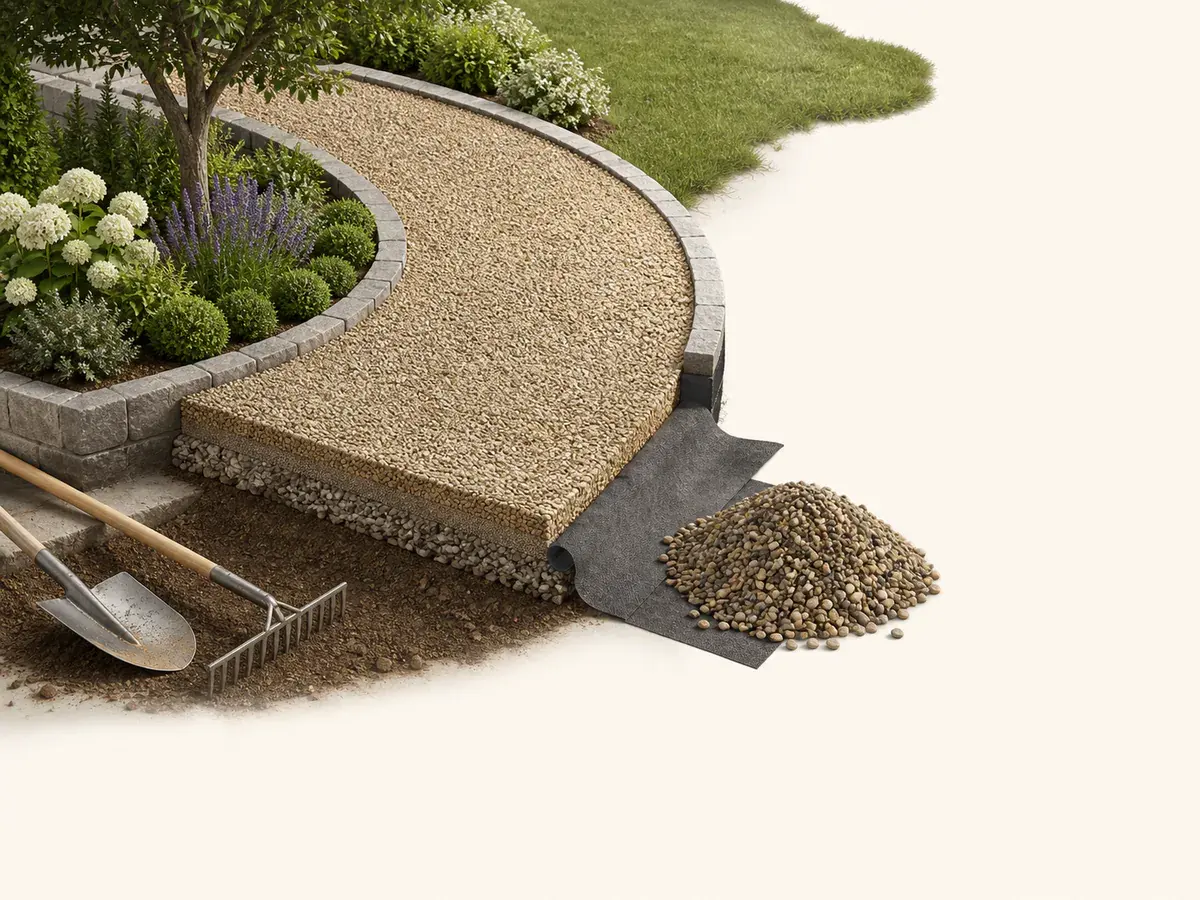
Step 2 · Visual referenceCheck the active area
Residential gravel project reference
Surface area120 ft²Installed depth4 inRaw volume1.48 yd³

Why it mattersConfirm the project surface, compacted depth and raw volume.

Reference image; figures update from your measurements.

You’ll need

1.63 cubic yards
Shopping list
1.63bulk cubic yards
880.5 cu ft bags (alternative)
1 section$117.33 primary material estimate

Project shopping list

Use your result as a starting point, then confirm package coverage, product instructions and local requirements before purchasing.

MaterialGravelPackagebulk yd³AllowanceIncluded

How the calculation works

length × width × compacted depth

Enter each project area, choose the measurement system, then adjust waste and real package coverage. Packaged materials round up so the shopping list never suggests part of a box, sheet or panel.

MEASURE WITH CONFIDENCE

How to use the gravel calculator

Use finished path or pad length, average width and compacted depth. The calculator reports bulk volume and a small-bag alternative; weight is intentionally excluded because aggregate density varies.

Formula and guidance reviewed August 22, 2026. Always confirm the final order with product instructions and project requirements.
STEP BY STEP

What to measure

  1. 01

    Measure the finished footprint

    For a curved path, divide the route into shorter sections and use a representative average width for each one.

  2. 02

    Specify compacted depth

    Enter the finished compacted layer depth. Loose delivered material may occupy more volume before placement and compaction.

  3. 03

    Separate aggregate layers

    Base stone and decorative surface gravel can use different depths and densities, so calculate them as separate sections.

  4. 04

    Confirm supplier units

    Some suppliers sell by cubic yard and others by ton. Obtain the density or coverage factor for the exact aggregate before converting volume to weight.

WORKED EXAMPLE

30 × 4 ft path at 4 in compacted depth

  • Average 4 ft width
  • 10% allowance
  • 0.5 cu ft bag alternative
Calculated result

The estimated bulk volume is 1.63 cubic yards. The small-bag alternative rounds up to 88 half-cubic-foot bags.

Try your own measurements ↑
AVOID COSTLY REWORK

Common mistakes before you buy

  • Order base and finish aggregates separately when the section uses multiple layers.
  • Ask the supplier for a material-specific tons-per-yard conversion instead of using a universal density.
  • Fabric, edging, excavation and compaction equipment are separate project items.
FROM QUANTITY TO BUDGET

Compare the complete project cost

Your material quantity is only one part of a quote. Preparation, removal, access, finishing and local labour can change the installed total.

Build a gravel driveway$500–$3,500Estimate a gravel driveway by compacted area and depth while separating excavation, base layers, delivery and drainage.Read cost guide →Install landscape gravel$600–$3,500Budget decorative gravel by area and depth while separating stone, delivery, weed control, edging and grading.Read cost guide →
MEASURE BEFORE YOU ORDER

Planning guides for this calculator

Use the live model for feedback, then use these guides to verify the dimensions and material assumptions behind the result.

Measure & estimateGravel Depth by ProjectPlan compacted gravel depth for paths, patios and driveways without confusing loose delivery volume with finished thickness.Read guide →Choose & planGravel Density and TonnageConvert gravel volume into a supplier-ready tonnage estimate using the actual aggregate and moisture condition.Read guide →Compare materialsCrushed Stone vs Pea GravelCompare angular crushed aggregate and rounded pea gravel for compaction, drainage, walking, edging and decorative use.Read guide →Specify & buyHow to Order Gravel from a SupplierTranslate project area into an exact aggregate name, compacted quantity, delivery plan and checkable weigh ticket.Read guide →Plan a projectGravel Driveway Layer PlanningPlan subgrade, base and surface aggregate as separate compacted layers for a residential drive.Read guide →Avoid failuresHow to Prevent Gravel Ruts and MigrationReduce wheel tracks, washouts and loose stone spread by addressing water, subgrade, gradation, edge and compaction.Read guide →Time the workBest Weather and Site Conditions for Gravel InstallationProtect subgrade and compaction by scheduling around moisture, access and drainage.Read guide →Protect & maintainGravel Compaction and Return-to-Traffic GuideRelease a path, patio or drive from measured grade and stability rather than appearance.Read guide →Manage the projectGravel installation: Budget, Quotes, Safety and CloseoutManage a complete gravel installation project from measured quantity and comparable bids through safety checks, maintenance records and final acceptance.Read guide →Worked exampleGravel for a 10 × 20 Patio BaseEstimate compacted base volume and illustrative tonnage for a 200 sq ft patio at 4 in depth.Read guide →Worked exampleGravel for a 12 × 50 DrivewayWork out a 600 sq ft driveway layer at 6 in compacted depth and convert it with an editable density.Read guide →Worked exampleGravel for a 3 × 50 PathEstimate a narrow 150 sq ft garden path with a 3 in compacted gravel layer.Read guide →
TAKE THE PLAN TO THE SITE

Interactive project checklists

Use the pre-order list before material arrives, then save the inspection and maintenance list for closeout and future care.

GRAVEL · READYGravel Delivery Readiness ChecklistVerify aggregate designation, tonnage, truck route, dump point and spreading equipment before delivery.Open 12-task checklist →GRAVEL · CAREGravel Surface Maintenance ChecklistInspect drainage, crown, ruts, edges and loose surface material before ordering a top-up load.Open 12-task checklist →
COMMON QUESTIONS

Gravel calculator FAQ

How many tons of gravel do I need?

Tons depend on the density of the exact stone, moisture and gradation. Calculate volume here, then multiply by the supplier's verified tons-per-cubic-yard factor.

Should gravel depth be loose or compacted?

Enter the planned compacted finished depth. Discuss the extra loose volume required with the supplier or installer.

How do I calculate gravel for a curved path?

Break the curve into shorter sections, measure an average width for each section and add them separately. The visual guide shows why one straight full-length rectangle can overstate the area.

Plan accurately. Build safely.

This calculator is a planning estimate, not engineering or code approval. Follow manufacturer instructions and consult a qualified professional for structural, electrical, gas or permit-sensitive work.