A decision you can check
- 01
Pressure-treated lumber
Widely available structural wood is economical but can shrink, check and need periodic protection. Grade and treatment category matter.
- 02
Cedar decking
Cedar provides natural colour and workability with lower density. Regular cleaning and finish choices affect weathering and splintering.
- 03
Capped composite
Composite resists rot and avoids staining cycles, but costs more, can feel hot and requires the specified joist spacing and expansion gaps.
- 04
Confirm the complete system
Compare the selected deck surface with preparation, accessories, labour, maintenance and replacement needs. Record the exact product rather than carrying a generic category into the order.
Compare performance before price
Board price does not include different fastener systems, blocking, fascia and labour.
Colour and heat should be tested with a sample in direct project sun.
- Pressure-treated lumber
- Cedar decking
- Capped composite
Use the calculator without hiding the choice
Keep the verified project dimensions fixed in the Decking Calculator, then change only the package coverage, unit size or waste assumption that belongs to the selected deck surface. This shows the cost of the decision without changing the room or site.
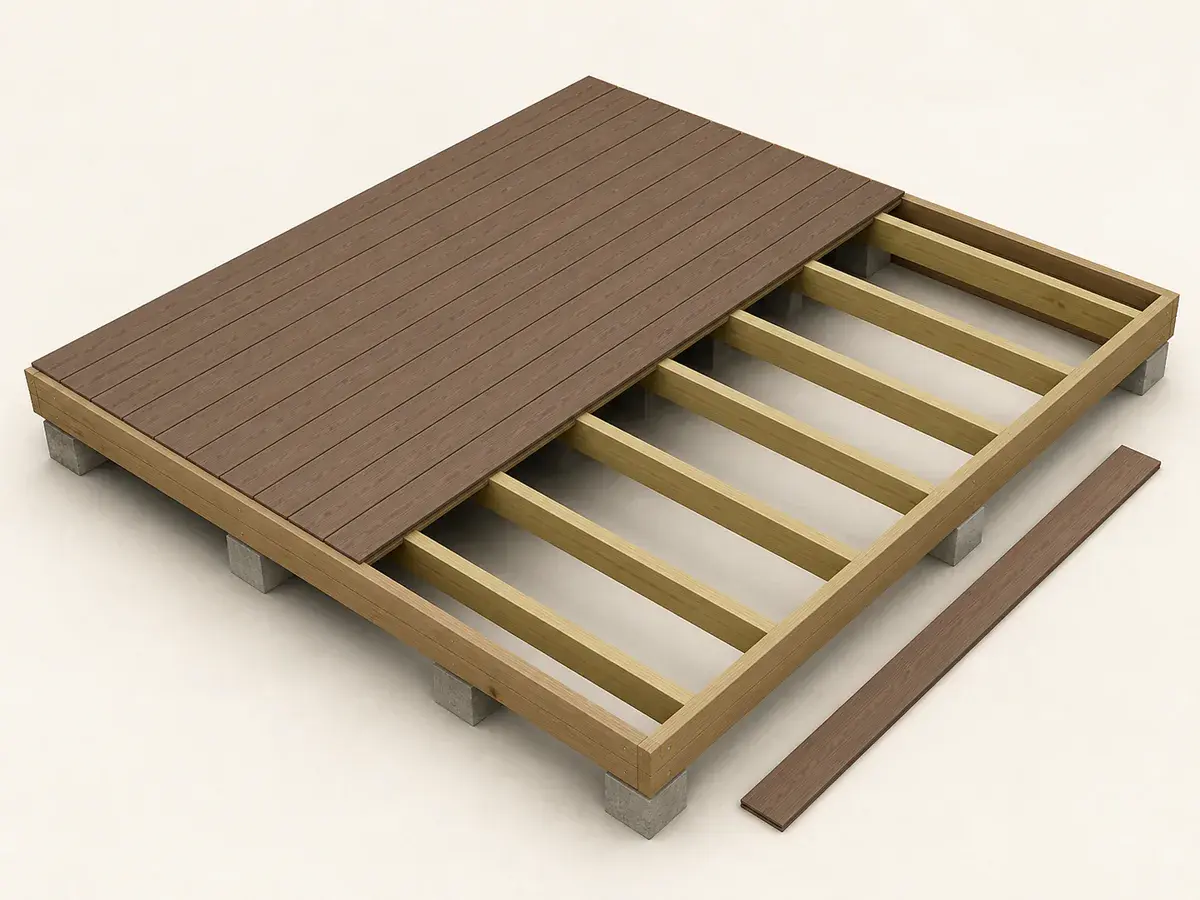
Existing framing must be inspected before resurfacing; a new board cannot correct weak structure.
Approve a real sample and specification
Review the exact product or a representative sample in the project conditions, read the current technical data and write the locally recognized designation or product line, performance class, size, finish where relevant and accessory system into the purchase scope. Availability and installer experience can make a technically acceptable option impractical locally.
What usually throws the order off
- Comparing board price without the fastening system
- Installing new boards over unchecked framing
- Using one gap in every temperature
- Assuming hidden clips work at every border
Frequently asked questions
Which deck surface option is best?
There is no universal winner. Use the pressure-treated vs cedar vs composite decking criteria to eliminate options that do not meet the location, exposure, substrate or maintenance requirement, then compare complete installed systems.
Can I compare options by advertised price alone?
No. Convert each deck surface option to the same finished scope and include its preparation, accessories, delivery, installation, maintenance and replacement implications.
Can appearance or a sample approve the order?
No. A sample helps judge appearance; current technical documents establish performance, installation limits, warranty and the quantity or capacity represented by the exact deck surface.
Technical references
These references support the measurement and planning method. Product instructions, the site and applicable local requirements control the final installation.