A worked calculation you can check
- 01
Write the measured scope
Pavers for a 10 × 12 Patio begins with a visible, checkable scope: Patio: 10 ft × 12 ft = 120 sq ft; Paver face: 8 × 4 in = 0.2222 sq ft; Paver waste: 10%; compacted base: 4 in. Keep the units beside every dimension so feet, inches, square feet and purchase coverage cannot be mixed silently.
- 02
Run the unrounded arithmetic
The paver order area is 120 × 1.10 = 132 sq ft; 132 ÷ 0.2222 is about 594 pavers. Base volume is 120 × 4 ÷ 12 = 40 cu ft, or 1.48 cu yd.
- 03
Convert to complete pavers or product pallets plus aggregate
Plan about 594 individual pavers and 1.48 compacted cu yd of base before product packaging and compaction conversion. Round only after the final division, then reconcile the number with the sizes or increments the supplier actually sells.
- 04
Test the result against the real project
If the pavers ship as a mixed-size pattern pallet, use the pallet's published coverage rather than counting every unit as an 8 × 4 rectangle. Use actual paver face or packaged pattern coverage, base footprint, bedding layer and pattern-specific waste for the selected system.
Worked inputs and arithmetic
Estimate 8 × 4 in pavers and a four-inch compacted base for a 120 sq ft patio.
The paver order area is 120 × 1.10 = 132 sq ft; 132 ÷ 0.2222 is about 594 pavers. Base volume is 120 × 4 ÷ 12 = 40 cu ft, or 1.48 cu yd.
- Patio: 10 ft × 12 ft = 120 sq ft
- Paver face: 8 × 4 in = 0.2222 sq ft
- Paver waste: 10%; compacted base: 4 in
What can change this answer
If the pavers ship as a mixed-size pattern pallet, use the pallet's published coverage rather than counting every unit as an 8 × 4 rectangle.
Finished elevation, drainage, subgrade, compacted lifts, edge restraint and loading determine the suitable pavement section.
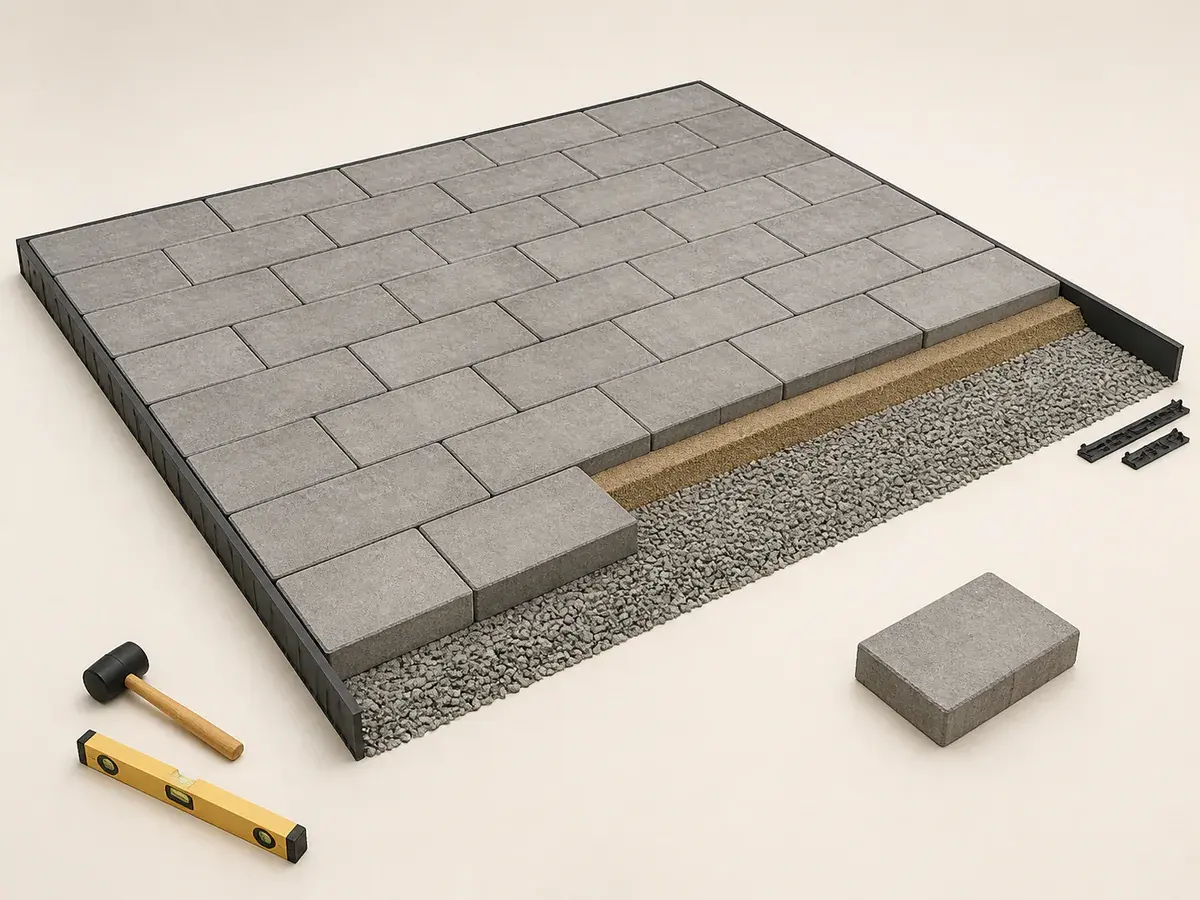
- Edge restraint may require base beyond the visible 10 × 12 field.
- Bedding sand and joint material are separate from the four-inch base.
- Curves, borders and diagonal patterns can need more than 10% paver waste.
Turn the example into your own order
Open the Paver Calculator, enter the dimensions from your site and replace the example coverage, yield, density, waste, package size or capacity with the exact value that applies to your paver and base quantity choice. Save the first measured result before testing alternatives so the reason for every change remains visible.
Use actual paver face or packaged pattern coverage, base footprint, bedding layer and pattern-specific waste for the selected system. Finished elevation, drainage, subgrade, compacted lifts, edge restraint and loading determine the suitable pavement section.
What usually throws the order off
- Copying the pavers for a 10 × 12 patio result without matching all three inputs
- Rounding every dimension before the paver and base quantity calculation
- Ignoring the buyable complete pavers or product pallets plus aggregate after the arithmetic
- Using extra paver and base quantity as a substitute for the site and product checks
Frequently asked questions
Can I use the pavers for a 10 × 12 patio answer for a slightly different project?
Use it only as a reasonableness check. Enter your own dimensions and assumptions in the Paver Calculator; small changes in depth, height, repeat, pitch, coverage or capacity adjustment can alter the rounded purchase unit.
Why does the final number round up?
Complete pavers or product pallets plus aggregate are not normally purchased as the exact decimal produced by division. Round the final requirement to the next available unit, then document any remaining matching stock instead of hiding it as vague waste.
What should I verify before buying?
Use actual paver face or packaged pattern coverage, base footprint, bedding layer and pattern-specific waste for the selected system. Also verify this project boundary: Finished elevation, drainage, subgrade, compacted lifts, edge restraint and loading determine the suitable pavement section.
Technical references
These references support the measurement and planning method. Product instructions, the site and applicable local requirements control the final installation.