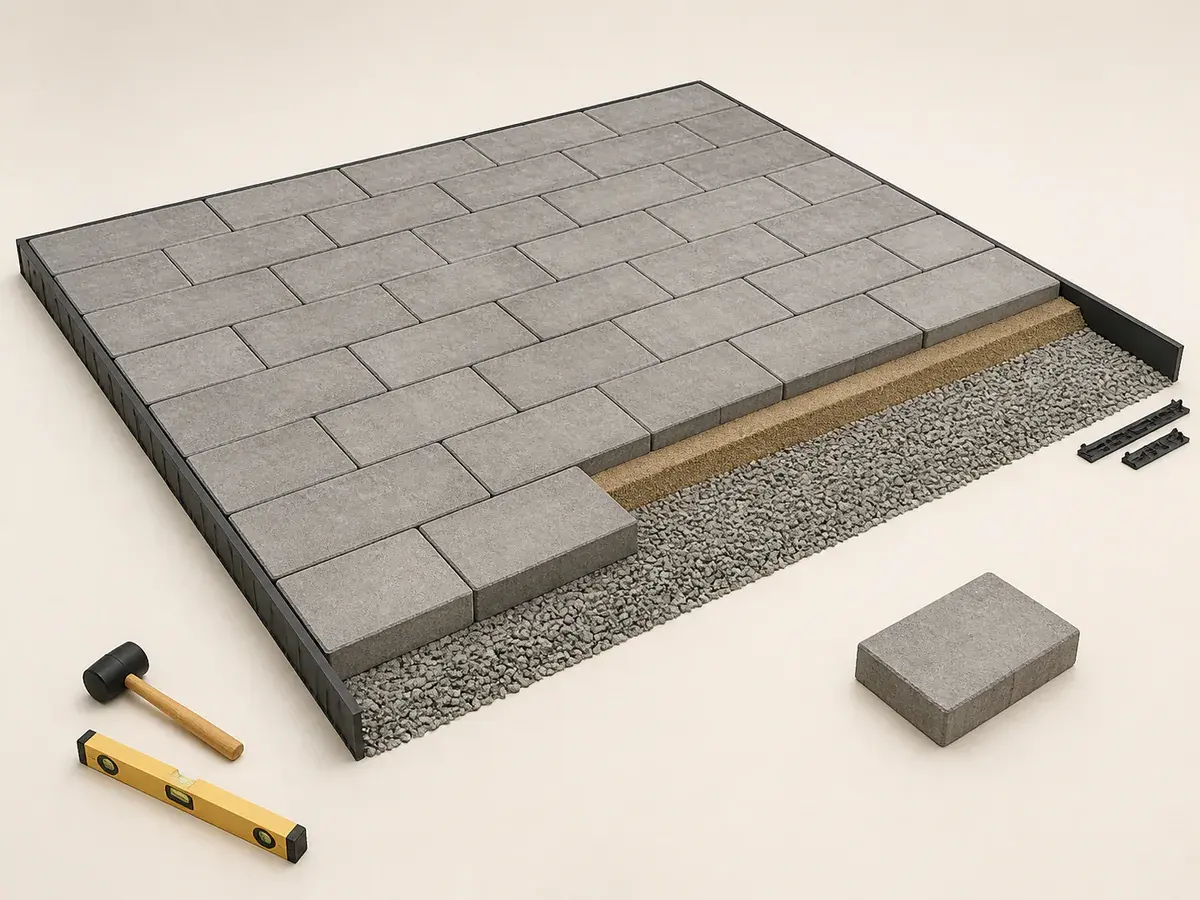
A decision you can check
- 01
Choose the supported edge
Select concrete, metal, plastic or another approved restraint based on the pavement design and adjacent landscape.
- 02
Extend and compact the base
Provide stable compacted support beneath and beyond the restraint instead of anchoring it into loose bedding sand.
- 03
Select joint material
Match ordinary or polymeric joint sand to joint width, paver type and drainage condition. Follow moisture and cleaning limits.
- 04
Measure perimeter and joint demand
Count restraint by exposed perimeter and joint material by product coverage, joint geometry and compaction passes.
Write a specification someone else can check
Polymeric sand is not a repair for a moving base or failed edge.
Excess material left on paver faces can haze after activation.
- Choose the supported edge
- Extend and compact the base
- Select joint material
- Measure perimeter and joint demand
Convert the decision into quantities
Enter the measured geometry in the Paver Calculator, replace defaults with the selected product coverage and round only at the final purchasable unit. List accessories and preparation materials separately so a coverage change does not silently scale unrelated items.
Permeable interlocking pavement uses a different open-graded joint and base system from a conventional sand-set patio.
Verify at order and delivery
Check the exact local designation or product code, performance class, size, colour or batch where relevant, stated coverage, yield, density or capacity, ordered quantity and accessory compatibility on the written order. Inspect delivered segmental paving before installation and isolate damaged or mismatched material while return and replacement options remain open.
What usually throws the order off
- Choosing pavers without a load rating
- Mixing material thicknesses casually
- Stopping the base at the visible edge
- Using polymeric sand to lock a failed base
Frequently asked questions
What must the segmental paving specification identify?
Make the scope checkable against these decisions: choose the supported edge; extend and compact the base; select joint material; measure perimeter and joint demand. Record the exact local designation or product, performance class, dimensions, finish where relevant, accessories and controlling technical document.
Which calculator default changes after product selection?
Replace whichever default the exact segmental paving controls—coverage, yield, density, dimensions, package quantity or capacity—while keeping the verified project geometry unchanged.
Who should approve a substitution?
The owner and responsible designer or installer should confirm in writing that the substituted segmental paving preserves required performance, appearance, compatibility, installation method and documented supplier or project acceptance criteria.
Technical references
These references support the measurement and planning method. Product instructions, the site and applicable local requirements control the final installation.