Water Heater Leaking
Distinguish nearby condensation or plumbing drips from an active tank leak while staying clear of gas, combustion and high voltage.
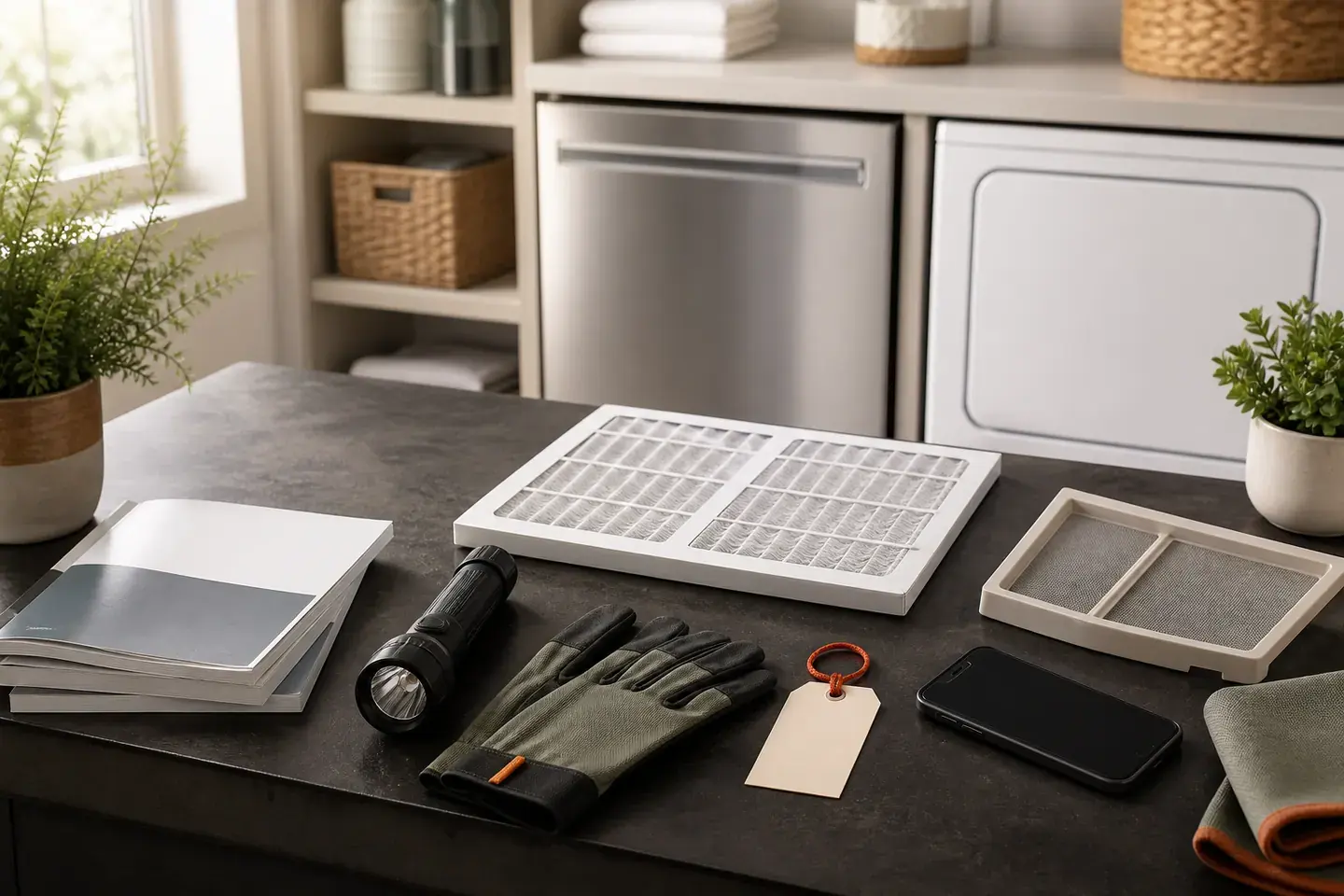
Keep guards, panels and safety devices in place. Stop whenever the next action needs tools, live testing, disconnection or access beyond the owner's manual.
Checks you can safely make
- Protect people and property
Keep clear of hot water and wet electrical areas. If water is actively spreading, use the accessible cold-water shutoff only when it can be reached without crossing water.
- Identify the highest wet point
From outside the appliance, look at visible supply connections, the temperature-pressure relief discharge, drain valve, pan and tank base. Photograph the first wet location.
- Rule out nearby sources
Check whether condensate equipment, a washing machine, softener or overhead pipe could be sending water toward the heater. Do not assume every puddle starts in the tank.
- Read external status only
Record a visible display or status-light code and the model number. Do not remove an element cover, burner door or insulation to look for the source.
Common questions
Does water at the base always mean the tank failed?
Not always; condensation, nearby pipes, the drain valve or relief discharge can run downward. A confirmed tank-body leak generally means replacement.
Can I cap a dripping relief-valve pipe?
No. The temperature-pressure relief path is a critical safety device. Continuous discharge needs qualified diagnosis and must never be blocked.
Sources and review basis
This guide limits itself to visible, non-invasive checks and uses current manufacturer or public-safety guidance.