Dryer Not Heating
Confirm the selected cycle and visible airflow before treating a slow load as an internal heater failure.
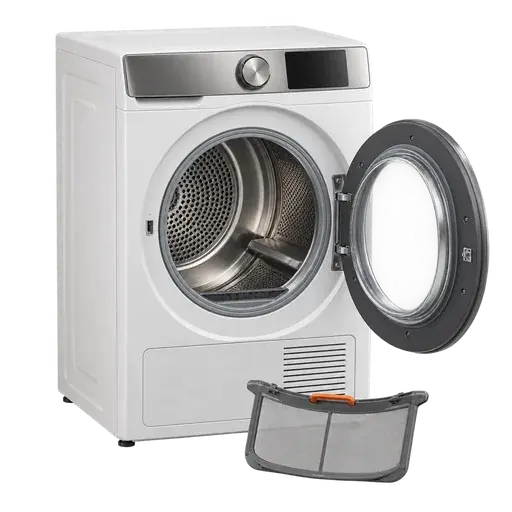
Keep guards, panels and safety devices in place. Stop whenever the next action needs tools, live testing, disconnection or access beyond the owner's manual.
Checks you can safely make
- Run a controlled heat check
Empty the drum, select a heated timed cycle and run it for five minutes. Open the door and check for warmth without touching the rear cabinet or vent.
- Rule out an air-only setting
Air Only, Air Fluff and some delicate settings intentionally add little or no heat. Retry with a normal heated timed cycle.
- Restore user-serviceable airflow
Clean the lint screen and check whether the outside exhaust hood opens. A restricted vent can create long dry times even when heat is present.
- Reduce the load
Separate an overfilled or tangled load so heated air can move through the fabric, then compare the result.
Common questions
Why does my dryer run but stay cold?
A no-heat cycle, partial loss of power on an electric model, closed gas supply or an internal component fault can allow the drum to turn without normal heat.
Can a blocked vent look like a heater fault?
Yes. Restricted airflow commonly causes long drying times, although a truly cold five-minute heated test points to a different fault.
Sources and review basis
This guide limits itself to visible, non-invasive checks and uses current manufacturer or public-safety guidance.