Dishwasher Leaking Water
Identify whether water first appears at the door, sink connection or beneath the cabinet without running a continuing leak.
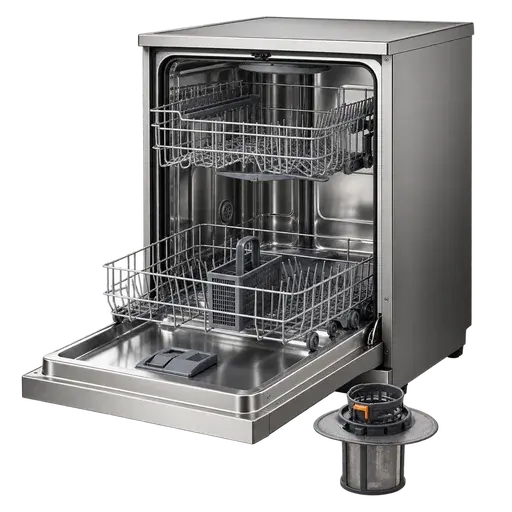
Keep guards, panels and safety devices in place. Stop whenever the next action needs tools, live testing, disconnection or access beyond the owner's manual.
Checks you can safely make
- Stop the active leak
Cancel the cycle, keep clear of wet electrical areas and close the accessible dishwasher water shutoff if water continues. Dry the floor to prevent a slip and limit cabinet damage.
- Map where water appeared
Note whether the first moisture was at a front corner, across the full door edge, under the center or inside the sink cabinet. A photo before cleanup helps service diagnosis.
- Check loading and detergent
Look for an item preventing the door from closing, a spray arm blocked by dishes, ordinary hand dish soap or excessive suds. Do not run another full cycle to prove the leak.
- Inspect accessible sealing surfaces
With power off, wipe food residue from the visible door gasket and check for an obvious fold, tear or trapped utensil. Leave hoses and underside components connected.
Common questions
Can too much detergent make a dishwasher leak?
Yes. Excessive or incorrect detergent can create foam that escapes around the door. The machine still needs inspection if leakage repeats with the correct product and dose.
Can I keep using it with towels on the floor?
No. Continuing operation can damage flooring and cabinets and may bring water toward electrical parts. Identify and correct the source first.
Sources and review basis
This guide limits itself to visible, non-invasive checks and uses current manufacturer or public-safety guidance.