Dishwasher Not Draining
Separate a normal filter-area puddle from a real drain fault, then check the cycle, filter and visible drain path safely.
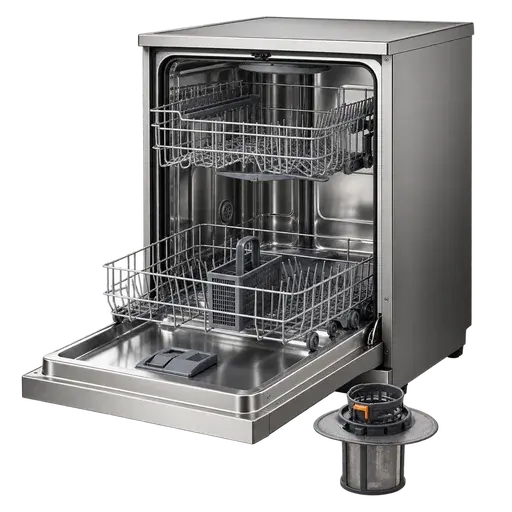
Keep guards, panels and safety devices in place. Stop whenever the next action needs tools, live testing, disconnection or access beyond the owner's manual.
Checks you can safely make
- Confirm the cycle finished
Close and latch the door, then use the model's Cancel/Drain control. A cycle interrupted by a door opening or outage may not have reached its drain stage.
- Judge the water level
A small amount around the filter can be normal and protects seals. Water reaching across the tub floor or toward the door is not the same condition.
- Clean the user-accessible filter
Switch the appliance off, remove the filter exactly as the owner's manual shows, rinse it with warm water and lock it back into place.
- Inspect the visible drain route
Check whether the sink drains, run the disposal if fitted, and look for a crushed hose or blocked countertop air gap. Do not disconnect plumbing.
Common questions
Is a little water below the dishwasher filter normal?
Often yes. Whirlpool notes that a small amount in the filter area can keep seals from drying. Water spread across the tub needs investigation.
Can I pour drain cleaner into a dishwasher?
No. Dishwasher manufacturers warn against drain-opening chemicals because they can damage components and create a safety hazard.
Sources and review basis
This guide limits itself to visible, non-invasive checks and uses current manufacturer or public-safety guidance.