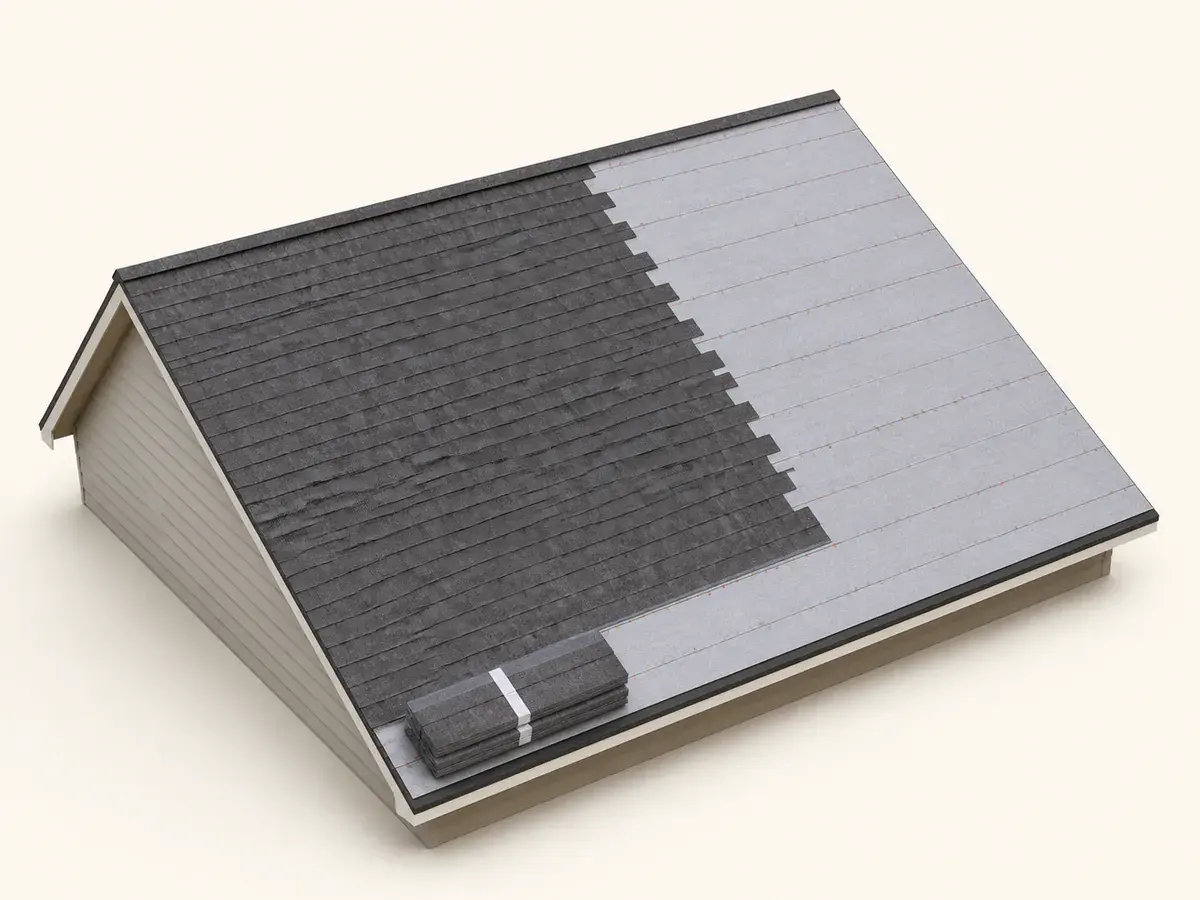
A decision you can check
- 01
Classify the roof geometry
Count hips, valleys, dormers and intersecting planes. Photograph or draw each detail so the allowance has a visible basis.
- 02
Use packaged coverage
Confirm bundle coverage and required exposure for the exact product. Do not assume every shingle line uses the same bundles per square.
- 03
Count accessory systems
Measure starter edges, ridge and hip length, valleys, penetrations and flashing independently from field shingles.
- 04
Protect compatible repair stock
Keep labelled shingles when practical because later colour blends and product dimensions may change.
Make the allowance explainable
A percentage allowance does not include hidden deck replacement or redesign of ventilation.
Valley method, ridge product and starter requirements follow the selected roof system.
- Classify the roof geometry
- Use packaged coverage
- Count accessory systems
- Protect compatible repair stock
Keep related materials separate
Roof work involves serious fall hazards; quantity planning is not authorization to access the roof.
Use the Roofing Calculator to test alternatives without changing the original site measurement. Adjust one assumption at a time—such as package coverage, layout allowance or product size—so the effect on the roofing order remains understandable.
Buy from the final specification
Check the final roofing quantity or capacity against exact product data, available purchase units and the supplier return policy. Record any lot, colour or matching-spare requirement that truly applies, but do not keep material that cannot be stored safely or usefully. Confirm installation requirements before delivery.
What usually throws the order off
- Using house floor area as roof area
- Forgetting overhangs and attached roof sections
- Treating ridge and starter as field coverage
- Choosing waste without mapping valleys and hips
Frequently asked questions
Is a larger roofing result automatically safer?
No. Apply only the quantity adjustment supported by layout, handling, product guidance, site conditions and final purchase units. Excess can raise cost, handling and disposal without improving the project.
Can one default allowance fit every project?
No. Treat defaults as early planning inputs, then replace them after reviewing the actual roofing geometry, selected product data, installation method, site conditions and purchase increments.
When should a qualified installer or supplier confirm the final order?
Before the order becomes non-returnable and again after site conditions or design details change. Reconcile the measured takeoff with the selected product and planned installation method.
Technical references
These references support the measurement and planning method. Product instructions, the site and applicable local requirements control the final installation.