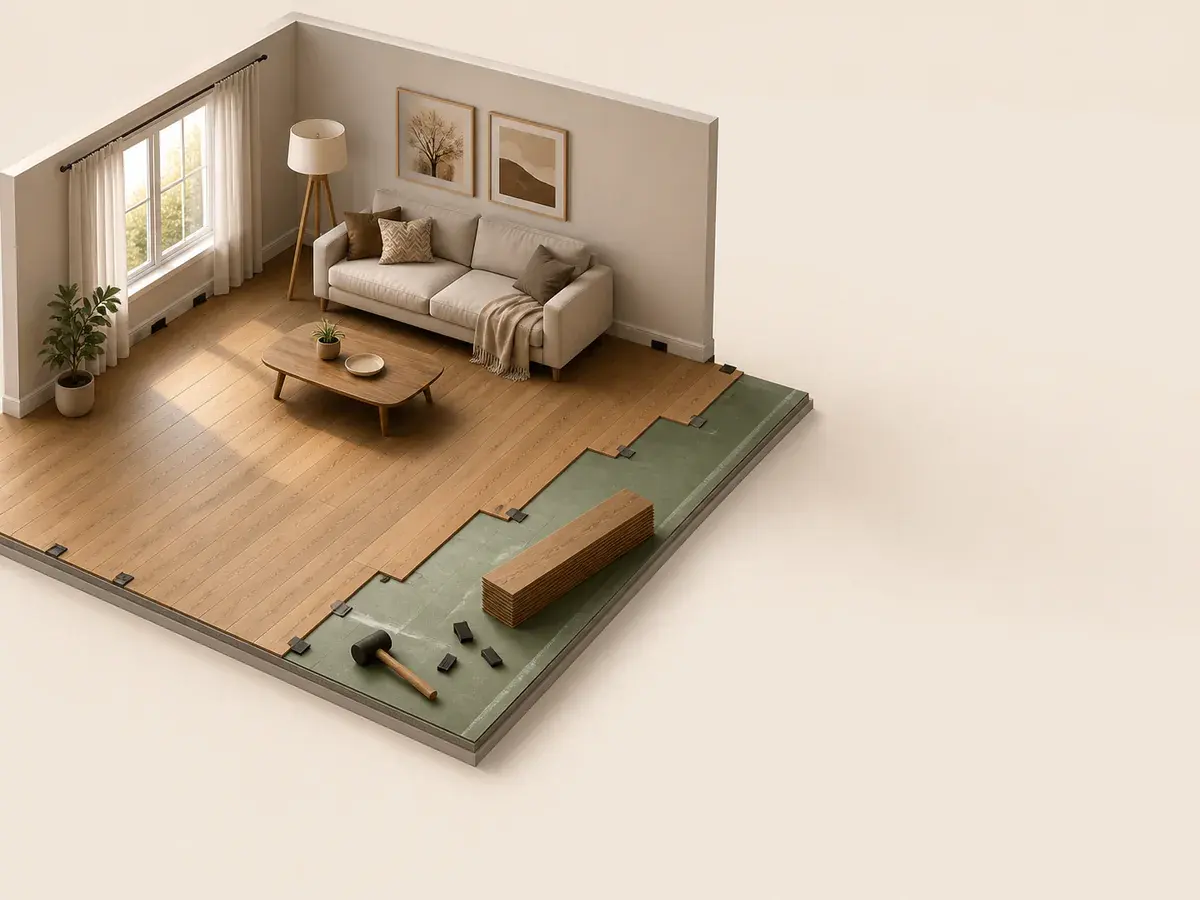
A worked calculation you can check
- 01
Write the measured scope
Flooring Boxes for a 12 × 12 Room begins with a visible, checkable scope: Net floor: 144 sq ft; Cutting and layout allowance: 10%; Product coverage: 23.5 sq ft per carton. Keep the units beside every dimension so feet, inches, square feet and purchase coverage cannot be mixed silently.
- 02
Run the unrounded arithmetic
The planned coverage is 144 × 1.10 = 158.4 sq ft. Dividing by 23.5 produces 6.74 cartons.
- 03
Convert to complete flooring cartons
Round up to 7 cartons, which supplies 164.5 sq ft. That leaves about 6.1 sq ft beyond the planning area for matching repairs. Round only after the final division, then reconcile the number with the sizes or increments the supplier actually sells.
- 04
Test the result against the real project
Test the first and last row widths before ordering; a centred layout or narrow cut can change offcut reuse even in a simple square room. The exact carton coverage, board direction, visual selection and retained repair stock determine the purchase quantity.
Worked inputs and arithmetic
Estimate cartons for a square 144 sq ft room using 10% layout waste and 23.5 sq ft box coverage.
The planned coverage is 144 × 1.10 = 158.4 sq ft. Dividing by 23.5 produces 6.74 cartons.
- Net floor: 144 sq ft
- Cutting and layout allowance: 10%
- Product coverage: 23.5 sq ft per carton
What can change this answer
Test the first and last row widths before ordering; a centred layout or narrow cut can change offcut reuse even in a simple square room.
Subfloor flatness, moisture, acoustic rules, transitions, stairs and installation method remain separate from net floor area.
- A diagonal layout needs more cutting allowance than the 10% used here.
- Closets and flooring beneath removable appliances belong in the measured scope when the product continues through them.
- A different SKU with the same plank dimensions can have a different carton piece count.
Turn the example into your own order
Open the Flooring Calculator, enter the dimensions from your site and replace the example coverage, yield, density, waste, package size or capacity with the exact value that applies to your flooring coverage choice. Save the first measured result before testing alternatives so the reason for every change remains visible.
The exact carton coverage, board direction, visual selection and retained repair stock determine the purchase quantity. Subfloor flatness, moisture, acoustic rules, transitions, stairs and installation method remain separate from net floor area.
What usually throws the order off
- Copying the flooring boxes for a 12 × 12 room result without matching all three inputs
- Rounding every dimension before the flooring coverage calculation
- Ignoring the buyable complete flooring cartons after the arithmetic
- Using extra flooring coverage as a substitute for the site and product checks
Frequently asked questions
Can I use the flooring boxes for a 12 × 12 room answer for a slightly different project?
Use it only as a reasonableness check. Enter your own dimensions and assumptions in the Flooring Calculator; small changes in depth, height, repeat, pitch, coverage or capacity adjustment can alter the rounded purchase unit.
Why does the final number round up?
Complete flooring cartons are not normally purchased as the exact decimal produced by division. Round the final requirement to the next available unit, then document any remaining matching stock instead of hiding it as vague waste.
What should I verify before buying?
The exact carton coverage, board direction, visual selection and retained repair stock determine the purchase quantity. Also verify this project boundary: Subfloor flatness, moisture, acoustic rules, transitions, stairs and installation method remain separate from net floor area.
Technical references
These references support the measurement and planning method. Product instructions, the site and applicable local requirements control the final installation.