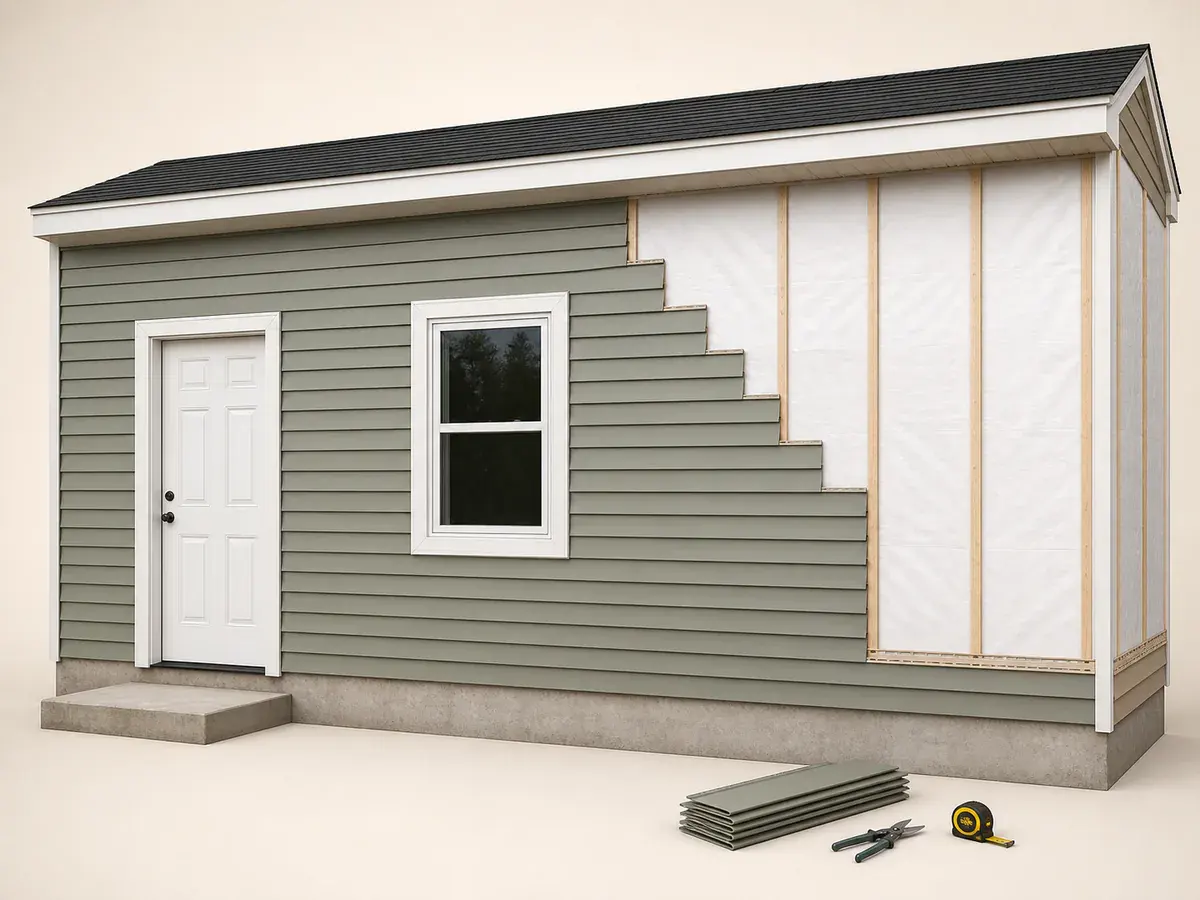
What a complete price should include
A useful estimate separates the base installation from preparation, removal and finishing. Check that every bid states the same scope before comparing totals.
- Manufacturer, profile, texture, exposure and color finish
- Old siding removal and sheathing inspection
- Water-resistive barrier, flashing, clearances and penetrations
- Trim, fasteners, caulk, paint, access and cleanup
Cost drivers that change the quote
Profile and layout
Lap planks, shingles and large panels create different material and labor patterns. Board-and-batten layouts add vertical joints, trim and alignment work.
Envelope condition
Removal can reveal wet sheathing, failed flashing or insect damage. Repair unit rates and photo documentation control this otherwise open-ended part of the scope.
Handling and access
Fiber cement is heavy and cutting creates respirable silica risk. Upper stories, gables and many openings add staging, handling, dust controls and detailed flashing.
DIY versus professional installation
Small low-risk repairs may follow the manufacturer manual, but whole-house work combines heavy panels, fall exposure, water management and silica dust. Professional installers should document cutting controls, clearances, flashing and fastening.
Questions to put in the written quote
- Net siding area, profile, exposure and waste
- Removal, sheathing repair rates and weather barrier
- Flashing, trim, fasteners, caulk and finish paint
- Access, silica controls, permits and product/labor warranty
Frequently asked questions
Is fiber cement sold prefinished?
Both factory-finished and field-painted options exist. The quote should identify the system and responsibility for cut edges and touch-up.
Why are sheathing repairs separate?
The wall behind existing siding is partly hidden until removal. Unit prices let the owner approve documented repairs without guessing a total.
Can installers dry-cut fiber cement?
Cutting methods must control respirable silica and follow product and workplace safety requirements. Ask how dust is captured or avoided.
Sources and update basis
Prices vary by location, access and specification. Market-price references establish the planning range; official and industry technical references support the safety, measurement and scope guidance. Neither replaces a local written quote, product instructions or applicable code.