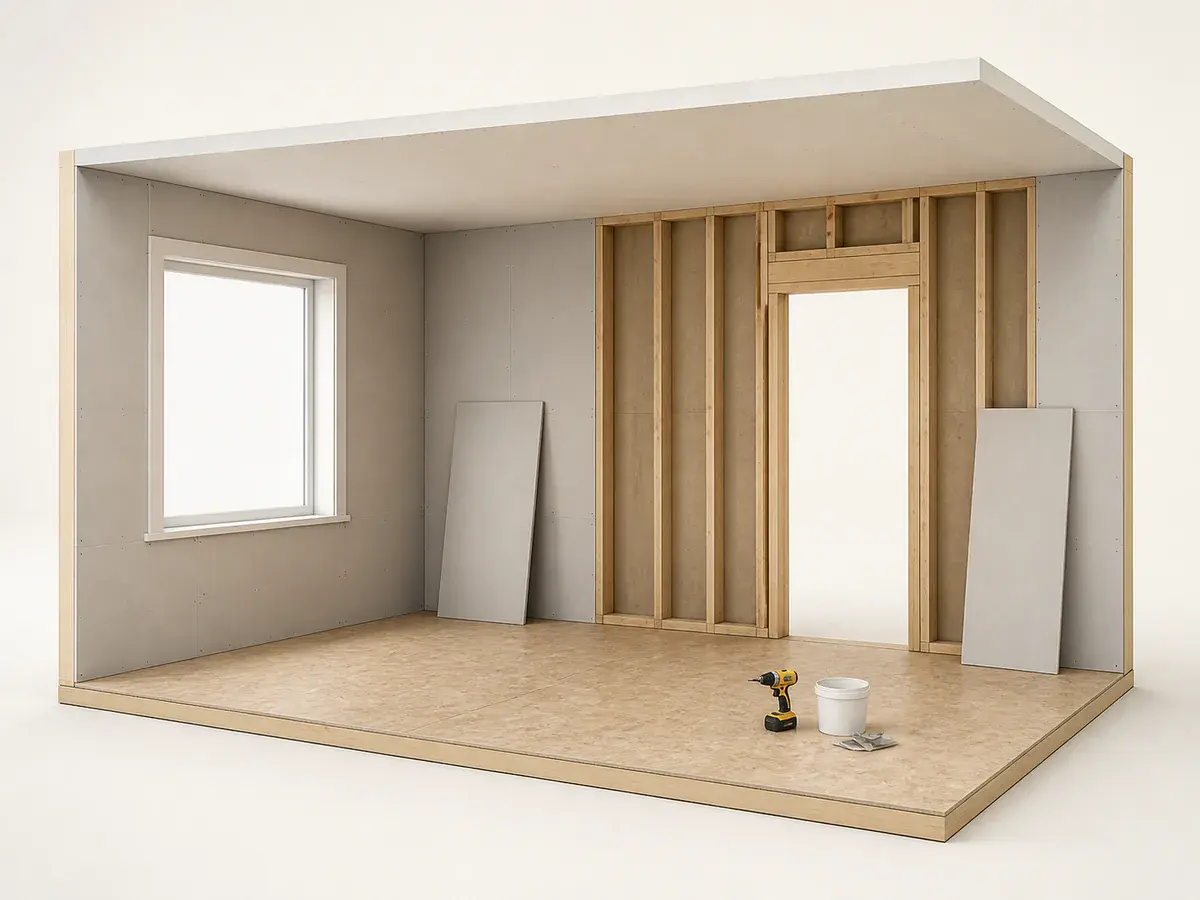
What a complete price should include
A useful estimate separates the base installation from preparation, removal and finishing. Check that every bid states the same scope before comparing totals.
- Cutout, backing and replacement board where required
- Tape, compound, corner treatment and sanding
- Texture matching or a clear exclusion
- Protection, debris removal, primer and paint as stated
Cost drivers that change the quote
Cause before patch
Water, movement, pests and impact damage need different upstream fixes. A cosmetic patch should not hide an active leak or structural movement.
Location and finish
Ceilings, high walls, corners and curved surfaces are slower than a low open wall. Smooth finishes and raking light reveal defects more readily.
Texture and paint blending
Matching orange peel, knockdown or specialty texture can require a larger blend area. Even identical paint may flash or differ from aged surrounding walls.
DIY versus professional installation
Tiny nail holes are approachable, but large cutouts need safe utility awareness, backing and repeated finishing. Wet, moldy, sagging or fire-rated assemblies require diagnosis and restoration beyond a surface patch.
Questions to put in the written quote
- Number, dimensions, location and cause of each repair
- Board type, backing and rated-assembly requirements
- Finish level, texture sample and blend area
- Primer, paint, furniture protection and return visits
Frequently asked questions
Why does a small drywall job have a high minimum?
Travel, protection and several drying visits can outweigh material cost, so contractors often apply a service minimum.
Will the repaired paint be invisible?
A spot coat may flash against aged paint. Painting the full wall to a natural break usually gives a more consistent result.
Can wet drywall simply dry out?
The moisture source and contamination matter. Soft, sagging or mold-affected material may need professional removal and environmental controls.
Sources and update basis
Prices vary by location, access and specification. Market-price references establish the planning range; official and industry technical references support the safety, measurement and scope guidance. Neither replaces a local written quote, product instructions or applicable code.