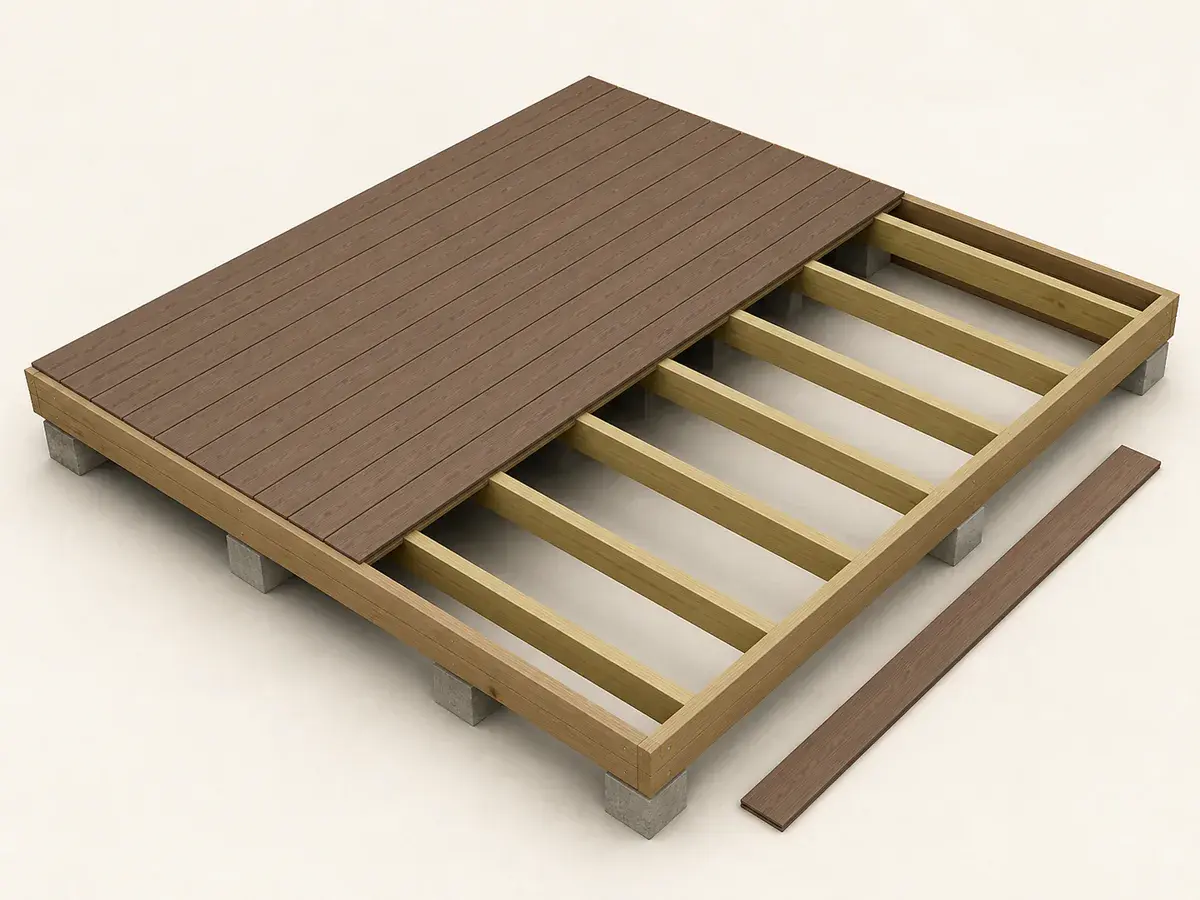
What a complete price should include
A useful estimate separates the base installation from preparation, removal and finishing. Check that every bid states the same scope before comparing totals.
- Footings, posts, beams, joists and required connectors
- Deck boards, fasteners and manufacturer accessories
- Guardrails, stairs and landings specifically shown
- Permit drawings, inspections, cleanup and stated finish
Cost drivers that change the quote
Structure before surface
Decking boards are only the visible layer. Footing depth, beam spans, ledger attachment, lateral connections and corrosion-resistant hardware determine much of the labor and code scope.
Height and access
A ground-level platform is different from a second-story deck. Height adds guard requirements, stairs, lifts, staging and risk, while a sloped yard can require longer posts and engineered details.
Material and railing system
Pressure-treated lumber, cedar, composite and PVC have different prices, spans and maintenance. Aluminum, cable, glass and composite rails can materially change the total.
DIY versus professional installation
A low freestanding platform may suit an experienced builder, but an attached or elevated deck is structural work affecting safe egress and the building envelope. Use a professional or approved design where footings, ledgers, guards and stairs are regulated.
Questions to put in the written quote
- Dimensioned plan, height and design loads
- Footing, framing, connector and ledger details
- Decking and railing manufacturer/product line
- Stairs, lighting, permits, demolition and finish exclusions
Frequently asked questions
Is deck cost based only on square footage?
No. Height, stairs, rails, footings, site access and material system can make equal-size decks cost very different amounts.
Are railings included in a per-square-foot price?
Not reliably. Railings are often priced by linear foot and premium systems can be a major separate line item.
Does a replacement deck need new footings?
Existing supports must be evaluated for condition, size and current code. Reusing them should be an explicit approved decision, not an assumption.
Sources and update basis
Prices vary by location, access and specification. Market-price references establish the planning range; official and industry technical references support the safety, measurement and scope guidance. Neither replaces a local written quote, product instructions or applicable code.